Circular Economy in Nepal The transition from a linear “take–make–dispose” economic model to a Circular Economy (CE) is essential for Nepal’s sustainable development, resource efficiency, and long-term climate resilience. Rapid urbanization, changing consumption habits, and limited waste management infrastructure have intensified environmental pressures across the country. Heavy reliance on single-use plastics, expanding packaging waste, and the ecological footprint of a growing tourism sector underscore the urgent need to decouple economic growth from resource depletion. By shifting toward circularity, Nepal can transform industrial waste into valuable resources, regenerate natural systems, and build localized, self-sustaining economies.
At Wildlife Conservation Nepal (WCN), we are deeply committed to embedding circular economy principles into the core of environmental action and resource governance. Recognizing that long-term biodiversity protection and ecosystem health are inextricably linked to sustainable production and consumption, WCN prioritizes circularity as a strategic cornerstone for climate resilience, community empowerment, and sustainable development across Nepal.
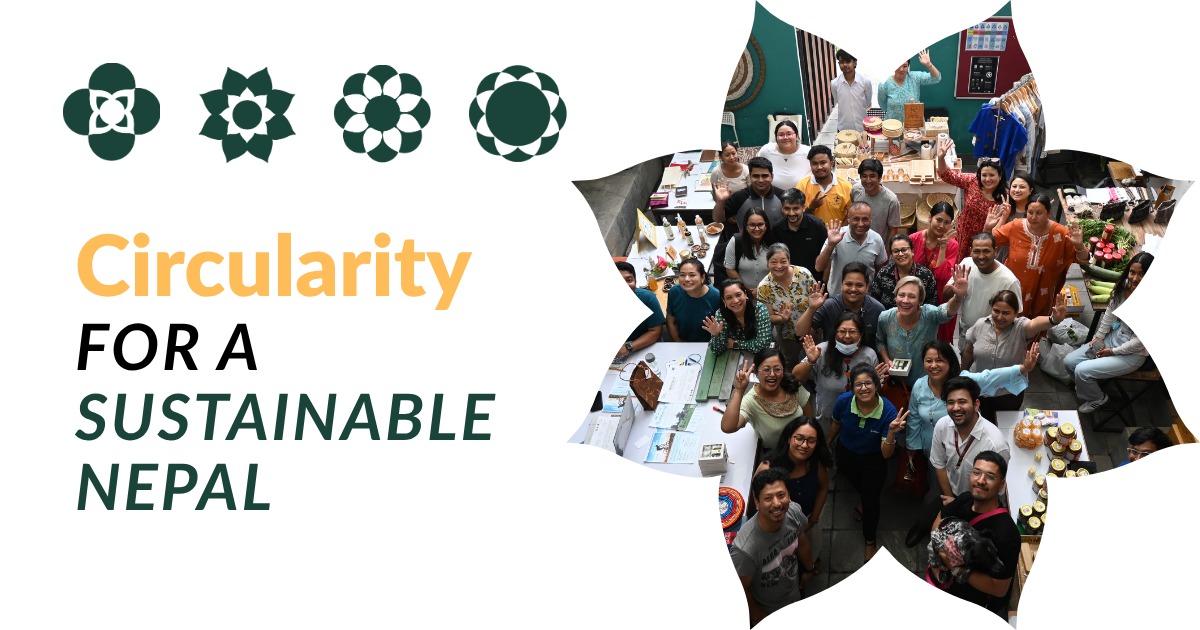
Roots of Circularity (RoC) Project The Roots of Circularity Nepal project is a four-year initiative running through July 2027. Its mission is to drive a systemic shift in national policy, mobilize civil society, and nurture the domestic entrepreneurial landscape to adopt circular principles at scale. Funded by the European Union and implemented by Impact Hub Association (IHA), Impact Hub Kathmandu (IHK), and Wildlife Conservation Nepal (WCN), the initiative focuses on building resilient circular ecosystems within the Bagmati and Lumbini Provinces.
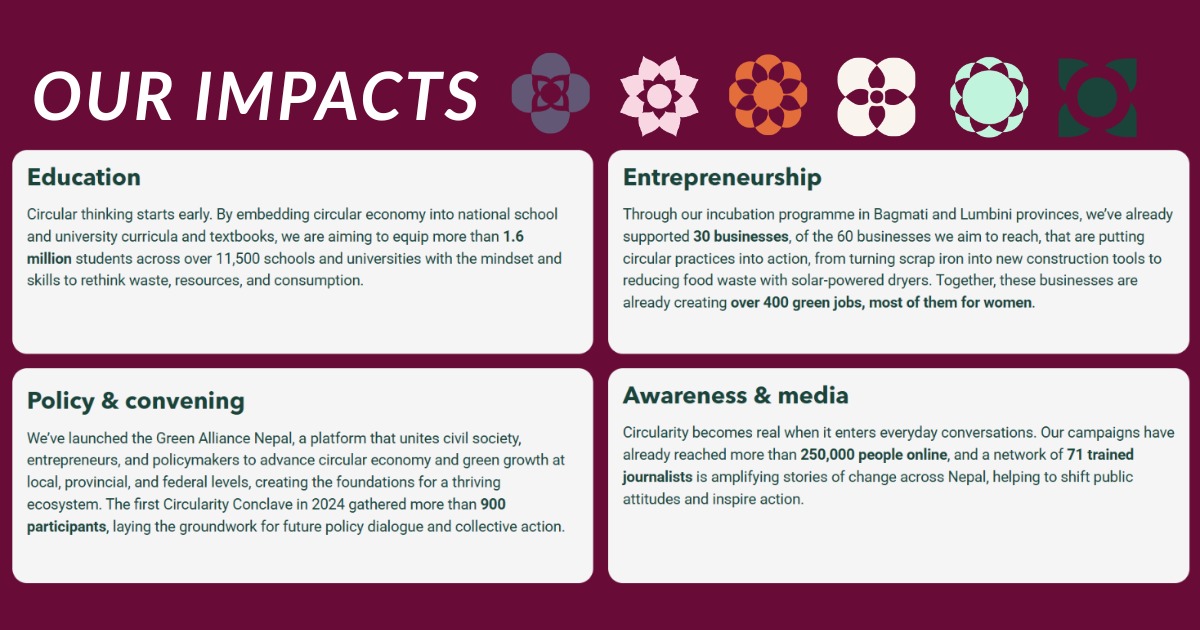
Our Four Pillars of Intervention RoC brings together stakeholders across four pillars: Education, Entrepreneurship, Policy & Alliance, Awareness & Media. To translate circular theory into nation-wide action, the RoC project coordinates multi-stakeholder efforts across four core pillars:
Education: Integrating age-appropriate circular economy concepts, sustainable design thinking, and environmental stewardship directly into school curricula and university programs. This equips the next generation with the skills to design out waste from the ground up.
Entrepreneurship: Providing seed funding, specialized incubation, design-thinking sprints, and technical coaching to green startups. We help MSMEs transition toward business models centered on repair, remanufacturing, organic upcycling, and circular supply chains.
Policy & Alliance Building: Establishing the Green Alliance Nepal, a collaborative platform bridging local enterprises, civil society organizations (CSOs), and government bodies at municipal, provincial, and federal levels to advocate for supportive circular policies.
Awareness & Media: Supporting media professionals, and deploying public outreach campaigns to build a broad cultural movement around conscious consumerism and resource regeneration.
Resources on Circular Economy Please read "Advancing Circular Economy in Nepal: Reflections from the Conclave on Circularity II in Lumbini Province" by Sanjeevani Yonzon and Sanjeeb Sharma.